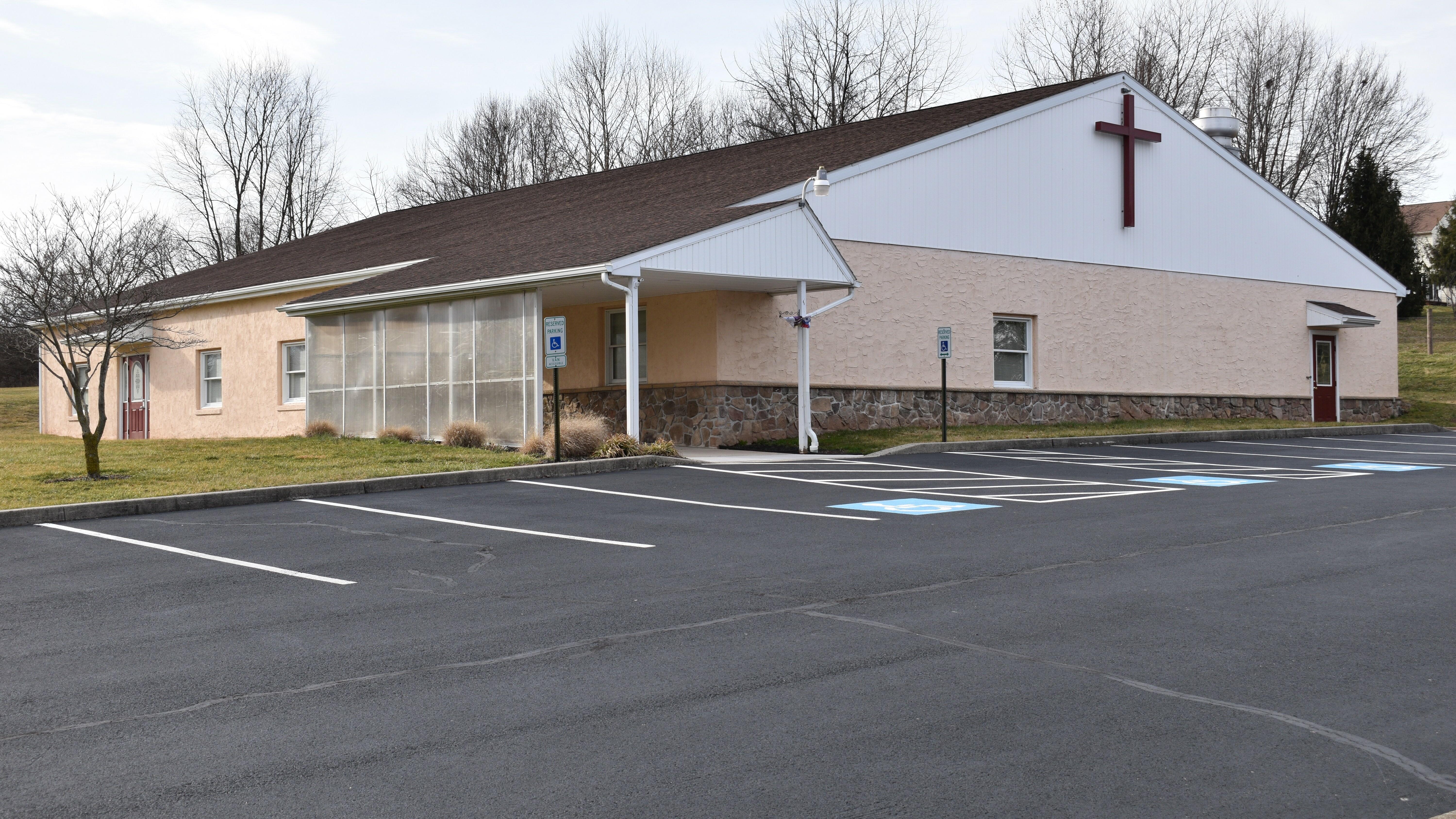
Spring City Fellowship
260503Sunday
Sunday May 3, 2026 10:15AM Service
Psalm 150:3NIV2011
- House Of The Lord
- Earth And Heaven Roar
- Above All
- Almighty
- Build My Life
- Lord I Need You
- How Great Thou Art
Malachi 3:10NIV2011
- Our theme for 2026 is “Embrace Transformation”Transformation is the inward change that we experience when we become more like Jesus.Jonah is a case study in what happens when someone does not embrace transformation.Transformation happens: you can resist it or you can embrace it.So this series is called Jonah: Escaping the Belly of the Fish.The belly of the fish is that place that God brings us to both to preserve us and to persuade us to turn around.Maybe you have been in a place like that?You get out by learning your lessonor you learn your lesson along the way so you never get there.Let’s see what lessons we can learn that might help us to “escape the belly of the whale.”Last week’s lessons were:God sometimes brings us down to lift us up.It’s a theology of suffering - God doesn’t cause suffering, but He does allow it for a reason, which often only He knows.God uses our mistakes for His glory.Don’t think that because you messed up, God can’t use you.He used a lot of messed up people in the Bible - like Jonah.God uses the thing we fear for our salvation.Sometimes the thing we are afraid of is the very thing God wants to use.We can fear God or we can fear everything else.Let’s see what lessons we can learn this week!We are going to do our scripture reading all together at the beginning.So lets stand together for the reading of today’s passage.
Jonah 2:1–10 ESV 1 Then Jonah prayed to the Lord his God from the belly of the fish, 2 saying, “I called out to the Lord, out of my distress, and he answered me; out of the belly of Sheol I cried, and you heard my voice. 3 For you cast me into the deep, into the heart of the seas, and the flood surrounded me; all your breakers and your waves passed over me. 4 Then I said, ‘I am driven away from your sight; yet I shall again look upon your holy temple.’ 5 The waters closed in over me to take my life; the deep surrounded me; weeds were wrapped about my head. 6 To the roots of the mountains I went down, to the land whose bars closed upon me forever. Yet you brought up my life from the pit, O Lord my God. 7 When my life was fainting away, I remembered the Lord, and my prayer came to you, into your holy temple. 8 Those who pay regard to vain idols forsake their hope of steadfast love. 9 But I with the voice of thanksgiving will sacrifice to you; what I have vowed I will pay. Salvation belongs to the Lord!” 10 And the Lord spoke to the fish, and it vomited Jonah out upon the dry land.This entire chapter - or nine out of ten verses - is a prayer.We saw last week the Jonah kept going lower until we were wondering just how low he could go.This week we know how low he went - to the bottom of the ocean.He is miraculously alive in the belly of a fish.And He is praying...There are different kinds of prayers.There are prayers that we pray routinely - almost without even thinking.There are prayers that we pray thoughtfully - carefully crafted prayers - almost as if we are working thing out in our own minds as we are praying.And then there are those prayers that come from deep within - like we don’t know what to pray - words may not even be enough.But the words that we do pray express our deepest feelings - even the longings of our heart.By studying Jonah’s prayer we are exploring the deep places of our own hearts and applying these lessons to our own lives.God hears you, even when you can’t hear Him.I mentioned on the first week that Jonah was a controversial book.Some people doubt the whole “swallowed by a fish” thing.And some people question the literary style, which they say is too simple - like a child’s taleHere is another thing they criticize - Jonah’s prayerHebrew poetry scholars say this prayer is constructed according to the pattern of a psalm of thanksgiving.They think a lament or a prayer of confession would be more appropriate.Well let’s think about this a minute...I don’t think that Jonah had his ink and parchment handy when he was in the belly of the fish.So whatever was written was written some time after the fact - perhaps even by someone else writing the story as it is being told.So what you get after the fact, takes the shape of a psalm of thanksgiving - because by that time we already know how this story ends.So the story, in the form that we have it, is already shaped by the conclusion.But as we are reading the story, we are also imagining what it must have been like to have gone through it and not know the ending.God is faithful.One of the elements of a psalm of thanksgiving is that it begins with a summary statement.So from verse 1 (which is actually verse 2) we know that God heard Jonah’s prayer.Jonah 2:2 CEV 2 When I was in trouble, Lord, I prayed to you, and you listened to me. From deep in the world of the dead, I begged for your help, and you answered my prayer.So for the critics, that means the suspense is totally gone.But for the rest of us - hear the story within the story.Jonah was as good as dead - and God still heard Him!One thing about Jonah’s prayer - which we will talk about next - it that almost every line is quoted from somewhere else in the scripture.Sometimes poetry uses indirect references.Indirect references are phrases that we use assuming that people know the context and can finish the thought.“A friend in need… (is a fiend indeed)”“A penny saved...(is a penny earned)”“With a friend like you....(who needs enemies)”So when Jonah uses a phrase likeEnglish Standard Version Chapter 2all your breakers and your waves
passed over me.
That is a quote from Psalm 42 - so lets look at it in context to see what else he may be implying.Psalm 42:7–8 ESV 7 Deep calls to deep at the roar of your waterfalls; all your breakers and your waves have gone over me. 8 By day the Lord commands his steadfast love, and at night his song is with me, a prayer to the God of my life.So the feeling that is conveyed is the helpless feeling of being pulled underwater by a wave.But the implication - the associated thought from the context of that quote is God is with me in the place and that my life belongs to Him.Jonah is remembering the faithfulness of God from the place of turmoil and death.Even the phrase “out of my distress” has a second part:Psalm 118:5 CSB 5 I called to the Lord in distress; the Lord answered me and put me in a spacious place.Imagine how that must have been for Jonah.Everything that he is feeling reminds him of a scripture.And every scripture that he can recall reminds him of God’s faithfulness.Many phrases from Jonah’s prayer come from the Psalms, but a few come from the book of Lamentations.Like when Jonah says:English Standard Version Chapter 2The waters closed in over me
That comes from Lamentations 3 but it continues like this:Lamentations 3:54–57 ESV 54 water closed over my head; I said, ‘I am lost.’ 55 “I called on your name, O Lord, from the depths of the pit; 56 you heard my plea, ‘Do not close your ear to my cry for help!’ 57 You came near when I called on you; you said, ‘Do not fear!’So when we read that Jonah is talking about the water closing over His head - the reader is supposed to know that God hears that cry and responds with “Do not fear!”In other words, Jonah is at the end of himself, but God is there.There is always hope.The thing about Jonah’s prayer - and many of our prayers as well - is that more than half of what we are saying isn’t expressed in words.Jonah is in desperation - but hope is still there - lingering beneath the surface.All the things that Jonah has learned about God are coming back to him.even his despondent thoughts are calling to mind the foundation of faith in his life.Here is another one:English Standard Version Chapter 2Then I said, ‘I am driven away
from your sight;
That is a reference to Psalm 31:21-22Psalm 31:21–22 ESV 21 Blessed be the Lord, for he has wondrously shown his steadfast love to me when I was in a besieged city. 22 I had said in my alarm, “I am cut off from your sight.” But you heard the voice of my pleas for mercy when I cried to you for help.When Israel was taken captive, they were put under seige.The seige did not end well, many of them were taken off into captivity.Israel was for all intents and purposes - dead.But the end was not the end.There was a group from the Southern Kingdom of Judah who eventually returned and rebuilt the temple in Jerusalem.Jonah also alludes to the Temple in his prayer.English Standard Version Chapter 2yet I shall again look
upon your holy temple.
This reference corresponds to what was prayed at the dedication of the fist temple.1 Kings 8:38–39 ESV 38 whatever prayer, whatever plea is made by any man or by all your people Israel, each knowing the affliction of his own heart and stretching out his hands toward this house, 39 then hear in heaven your dwelling place and forgive and act and render to each whose heart you know, according to all his ways (for you, you only, know the hearts of all the children of mankind),Praying toward the temple in Jerusalem was an act of confession - with the promise that God would forgive.The prophet Daniel prayed toward Jerusalem three times a day, confessing the sin of his people.Jonah is remembering being in the temple as he prays.He is remembering what it is like to be in the presence of God.In that sense, he is also praying toward the presence of God. (who knows which direction he is actually facing - he probably didn’t even know which way was up.)He remembers what was prayed at the dedication of the temple - that God hears confession and forgives.With that, Jonah has hope that he will see the temple - he will again be in the presence of God.All of that comes from studying the prayer of Jonah in its context.When you don’t know what to say, pray the scriptures.Admittedly, when we are in the most difficult situations, it is difficult to find the right words to pray.That is why it is beautiful how the Bible captures all of the various types of human experience and puts it into words that we can use to express to God and to encourage each other.Memorize the scriptures, especially the Psalms, the poems and the prayers.You never know when one of them will become your prayer and also remind you of God’s faithfulness in your time of need.Psalm 43:3 ESV 3 Send out your light and your truth; let them lead me; let them bring me to your holy hill and to your dwelling!God’s word is like the beacon of a lighthouse that orients us to what God is saying and doing.Don’t wait until you are in the belly of a fish.I don’t think Jonah was doing any reading in there - all his prayers were from memory.Did you know you can pray the scripture?Those of you who come from a liturgical background with written prayers - where do you think those prayers come from?They are crafted from psalms, poems and prayers in the scripture.Even in the Charismatic movement many have exhorted the church to pray the scriptures.I remember a book by Wes and Stacy Campbell on praying the scriptures that came out in the late 90’s or early 2000’s - it was supposed to be a new thing, but it was a very old thing that was being rediscovered.After that book came out, we began doing this in our prayer meetings. Rather than have people pray long prayers about random things and have to reel everyone back in. We encouraged people to ask the Lord for a scripture and then turn it into a prayer.Christians throughout the centuries have been praying the scriptures.There are several ways to do this.Read a passage repeatedly.Psalm 119:97 TPT 97 O how I love and treasure the revelation of your word; throughout the day I fill my heart with its light!There is an ancient practice of reading the scripture repeatedly that has also had a resurgence in modern times.Its call “Lectio Divina”It is Lain for “spiritual reading”The idea is to read the scripture over and over (at least three times) and meditate on what you are hearing.It was not only used by monks in the third century, it is also used by missionaries sharing the gospel where it has never been heard before.The idea is to read a passage multiple times - pausing in between to reflect on its meaning.For example take Jonah 2:6Jonah 2:6 ESV 6 To the roots of the mountains I went down, to the land whose bars closed upon me forever. Yet you brought up my life from the pit, O Lord my God.What words and phrases stand out to you?What is the picture that is forming in your mind?Let me read it again, in a different voice - or a different translation.Jonah 2:6 LEB 6 I went down to the foundations of the mountains; the Underworld—its bars were around me forever. But you brought up my life from the pit, Yahweh my God.Now what do you hear that you did not notice before?Where do you see yourself in this picture?Let’s read it a third time - different voice, different translation - and listen intently for what God may be saying.Jonah 2:6 CEV 6 I had sunk down below the underwater mountains; I knew that forever, I would be a prisoner there. But, you, Lord God, rescued me from that pit.The goal of Lectio Divina is not just to understand the scriptures, but to hear God speaking to us through them.Jonah’s story becomes our story.Jonah’s prayer becomes our prayer.Jonah’s revelation of God becomes our revelation.If you are reading the Bible and something jumps out at you - don’t just keep going - stop and read it again.Read it in another translation.Reflect on it.Meditate on it.Write down your own paraphrase of what you hear God saying to you.Make it your prayer.One way to pray the scripture is to meditate on it - meaning read it repeatedly - another way is to use the language of scripture.Use scriptural language.This is where the Psalms are really helpful.One third of the psalms are laments - essentially complaints.Psalm 69:1–3 ESV 1 Save me, O God! For the waters have come up to my neck. 2 I sink in deep mire, where there is no foothold; I have come into deep waters, and the flood sweeps over me. 3 I am weary with my crying out; my throat is parched. My eyes grow dim with waiting for my God.You get the idea - these are not happy songs.Most people are like “ you can say that? - I can’t believe he said that!”If you want to complain to God - just find a psalm that says what you want to say and pray that.One out of five are imprecatory psalms - poems that call down judgement - angry psalms.Psalm 109:1–4 ESV 1 Be not silent, O God of my praise! 2 For wicked and deceitful mouths are opened against me, speaking against me with lying tongues. 3 They encircle me with words of hate, and attack me without cause. 4 In return for my love they accuse me, but I give myself to prayer.These are definitely not happy psalms.Some of them are downright shocking with graphic violent language which is not very nice at all!If you are feeling agitated or irritated - the psalms have language for that too.The lesson is to go ahead and express your negative feelings to God - He may be the only one who can handle it.The other thing that the psalms do, after they express our raw emotions - they resolve.That is to say, they come around to bringing God back into the picture.They put our experiences into perspective when we consider God’s character, what He has done in the past and His revealed eternal purpose.Psalm 40:1–3 ESV 1 I waited patiently for the Lord; he inclined to me and heard my cry. 2 He drew me up from the pit of destruction, out of the miry bog, and set my feet upon a rock, making my steps secure. 3 He put a new song in my mouth, a song of praise to our God. Many will see and fear, and put their trust in the Lord.That one is one of my favorite - just meditate on that image for a while.I couldn’t feel anything solid beneath my feet.My mood was like quicksand - the more I struggled the deeper I sank.So I stopped struggling and tried to be still - waiting patiently for God.And He was there, lifting me up - I wasn’t sinking anymore.He gave me words to express my joy!and those words aren’t just for me they are for all who are struggling, just as I was - that they too might be saved.Ok, so that’s my paraphrase - but you get the idea.God’s Word is His words to you and you can use His words, not only to hear Him, but to communicate back to Him.Remember God’s promises, and remember your promises too.So we began by noting that Jonah gives us the conclusion right from the beginning - as a summary of why he is writing a prayer of thankfulness.Then, just like the psalms, he expresses his raw emotion, in words supplied by multiple passages of scripture.Each one has implied references to God’s faithfulness and His power to restore.You could say that all through his prayer, Jonah is remembering and meditating on the promises of God.God’s promises are those things which God has committed to do or to not do.Like God’s promise to Abraham to give him nay descendants.Or God’s promise to Noah never to destroy the earth with a flood.Or God’s promise from the time of the fall to crush the serpent - a promise of redemption.God’s promises are made in the context of a relationship.Every one of God’s promises is tied to a covenant.A covenant is a ritual bond and promises or vows are a part of that.Probably the best example of a covenant that we know today is the marriage covenant.It’s more than just an agreement - its a merging of lives and destinies.Jonah’s prayer resolves by remembering God and His covenant.For a moment there, Jonah forgot who He was and to whom he belonged.We belong to God.The language of belonging is covenant language.In marriage we use the language of belonging to each other to describe the covenant bond.We don’t use that language in many other places.People used to say that they belonged to a company, but that was back when it was customary that an employment agreement from a solid company meant you had a job for life.People generally don’t assume that, or talk that way any more.It also used to be a term that we would use to describe a person’s relationship to the church.“What church or denomination do you belong to?”Does anyone still say that?I think most people assume that you are just attending a church,though they might also imply that we all belong to the larger Body of Christ.I talked about this almost six years ago (Fall 2020) when I did a series on the book of Romans - how being a Christian is both believing and belonging.As modern, Protestant and non-denominational Christians we tend to focus more on what we believe.Like its all about understanding the Bible and that is how we have a relationship with God.However, for most of the church, and for the majority of the church age, it has been about belonging-being part of a covenant community and relating to each other as we relate to God.Both are important and we really should not have one without the other.The reason I bring up belonging and covenant is because of the language that Jonah uses in verse 8.Jonah 2:8 CSB 8 Those who cherish worthless idols abandon their faithful love,Faithful love - in Hebrew the word is hesedIt’s what God promised to Israel.It’s what Israel walked away from when they pursued other gods.I think Jonah is realizing that this is what he walked away from when he fled the presence of God.And its also where the people of Nineveh stand - outside of covenant.They’re out there on their own.Outside of covenant with God’s faithful love.But we are in covenant with God and have His faithful love...Our lives should reflect that.Jonah closes his prayer with a pledge to make a sacrifice and renew his vows to God.In other words, Jonah is realizing that, having been disobedient, he needs to reaffirm his covenant with God.Have you ever done that?You know you messed up - your “in the belly of the fish”Essentially your in a place with circumstances that you never thought you would be in.But God has demonstrated his faithfulness in that your still aliveand He is still with you even though you tried to walk away from Him.That’s faithful love!2 Timothy 2:13 ESV 13 if we are faithless, he remains faithful— for he cannot deny himself.That is the power of covenant - God loving you because of who He made you to be - not what you look like.When you finally get it - that is how God treats you - then that is how you also should love Him.God keeps His promises - you should keep yours.And that is the very thing our prayers should accomplish.Its not that we need God to hear us - He already hears us.Its not that we should tell God anything He doesn’t already know.It’s that we should remember who God is and what He has already revealed.When we express our deepest emotions it connects us to the reality that God knows, He cares and He has already done something about it.We begin to see our problems in perspective.We are not the only ones who have ever suffered.We are not the only ones to feel pain or to get angry.God Himself had been there and He understands.If you can just rest in that, you will find that He is there lifting you up.Psalm 40:2 NLT 2 He lifted me out of the pit of despair, out of the mud and the mire. He set my feet on solid ground and steadied me as I walked along.Compare that verse with the last verse of Jonah chapter 2.Jonah 2:10 CSB 10 Then the Lord commanded the fish, and it vomited Jonah onto dry land.Jonah was hurled from a slimy fish belly to dry land.And like Jonah, you will soon feel what it is to be on solid ground again.Questions for reflection:Can you think of a time when you didn’t have the words to pray? What scriptures came to mind? How did God show you His faithfulness?Are you able to express emotions in your prayers? Have you found a psalm that expresses what you are feeling? Isn’t it nice to know that God cares enough to give you words?Are you trusting in God’s promises? What does His faithful love mean to you? How do you reinforce and renew your covenant every day? Jonah 2:1–10ESV
Jonah 2:2ESV
Psalm 42:7–8ESV
Psalm 118:5ESV
Lamentations 3:54–57ESV
Psalm 31:21–22ESV
1 Kings 8:38–39ESV
Psalm 43:3ESV
Psalm 119:97ESV
Jonah 2:6ESV
Jonah 2:6ESV
Jonah 2:6ESV
Psalm 69:1–3ESV
Psalm 109:1–4ESV
Psalm 40:1–3ESV
Jonah 2:8ESV
2 Timothy 2:13ESV
Psalm 40:2ESV
Jonah 2:10ESV
- You Hold It All Together

Spring City Fellowship
(610) 948-5250
31 members • 6 followers