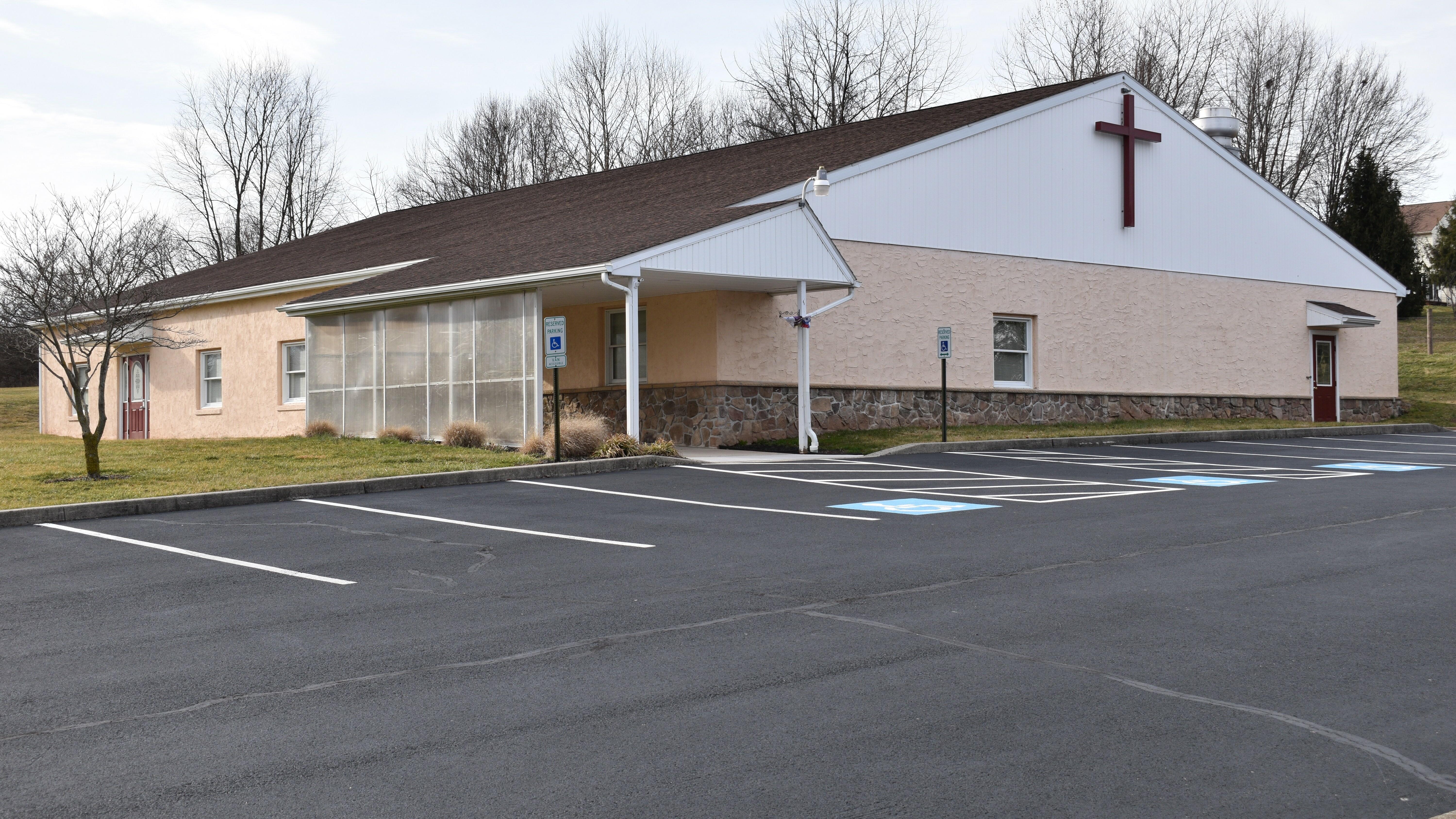
Spring City Fellowship
260913Sunday
Sunday September 13, 2026 10:15AM Service
Psalm 150:3NIV2011
- Praise Adonai
- Almighty
Proverbs 16:3NIV2011
- I Speak Jesus
- Tremble
- Show Me Your Glory
- The Lamb The Lion The King
- What He's Done
Psalm 139:1–4NIV2011
- Our Theme for 2026 is Embrace Transformation.We are going to take a break from our series in the book of James to celebrate three Jewish holidays.The Fall Feasts of Israel were not just prescribed for Israel but they are called “The Lord’s Feasts”
Leviticus 23:1–2 ESV 1 The Lord spoke to Moses, saying, 2 “Speak to the people of Israel and say to them, These are the appointed feasts of the Lord that you shall proclaim as holy convocations; they are my appointed feasts.Rosh Hashanah - The Feast of TrumpetsYom Kippur - The Day of AtonementSukkot - The Feast of TabernaclesAdmittedly, I don’t preach sermons on the fall feasts every year.Sometimes, the timing just doesn’t work out with the preaching calendar.And sometimes, like last year, I have a long fall series that just doesn't leave room for it.We do, however, normally mention it in the bulletin and I know some of our members celebrate these feast with regularity.It’s a good thing - because we will all be celebrating them in heaven!Our theme is embrace transformation, so if celebrating biblical feasts from the Old Testament is a new thing for you, I hope you will embrace it and the transformation it can bring as from the Lord.I thought it was good to include the Fall Feasts in our preaching calendar this year.First, because it has been a while - like five or six years.I found a sermon from 2020 - other years it started out on the preaching calendar but got replaces by last minute changes like guest speakers.Its about time! - It really is!I hope you appreciate the iron of that statement, because the Feast of Trumpets really is about time.A Jewish website that explains the holiday claims that Rosh Hoshana commemorates the birthday of Adam and Eve, and thus, the birthday of the world.It is the beginning of life as we know it and commemorates the beginning ( or one of the beginnings) of the year.Yes, the Jewish calendar has two “new years”Rosh Hashanah means “Head of the year” and is the beginning of the civil year or also the agricultural year.By the way, according to the Jewish calendar, the year is now 5787.Jewish each other “Shanna Tov” or Have a good year!Passover is also celebrated as a new year as it commemorates the Exodus from Egypt as a new beginning.It comes at the beginning of the calendar year - at least ever since the Exodus.And it commemorates a spiritual new beginning - Messiah, the passover lamb.Who, according to the best available scholarship, was actually born … not on Christmas, but on Rosh Hoshana.I know… hard to believe we could have gotten it wrong for so many years.But we can still celebrate the incarnation on Christmas because that was likely the time of conception.So to commemorate the Feast of Trumpets I am going to have Dave come and blow the shofar.Leviticus 23:23–25 ESV 23 And the Lord spoke to Moses, saying, 24 “Speak to the people of Israel, saying, In the seventh month, on the first day of the month, you shall observe a day of solemn rest, a memorial proclaimed with blast of trumpets, a holy convocation. 25 You shall not do any ordinary work, and you shall present a food offering to the Lord.”I am calling this message, “Are you ready?’That is the question that should be in our minds as we cross the threshold of a new beginning.Are we ready for what happens next?Are we ready to move with God and participate in what He is doing?Are we ready to embrace transformation?So here we go, if you are following along, there are notes in your bulletin insert.And for those watching online you can follow the link to our e-bulletin.Are you ready for a break?Rosh Hashana began on Friday September 11 at sundown and continues through sundown this evening.In Israel, this is normally a two-day holiday.In America, its a double holiday this year because it happens on a weekend.It’s like Shabbat times two.Like the three day weekend we had last week.Didn’t it feel good to have an extra day of rest?Maybe you used Labor Day as a work day, after all it is called LABOR day.In thinking about the Feast of Trumpets, we need to first review what it means to have Sabbath - take a break.So ask yourself his question...Do I take rest seriously?Sabbath literally means “to cease” - it means stopping.When you hear the shofar or the trumpet, you stop what you are doing.It’s not an option, it is a command.Leviticus 23:3 ESV 3 “Six days shall work be done, but on the seventh day is a Sabbath of solemn rest, a holy convocation. You shall do no work. It is a Sabbath to the Lord in all your dwelling places.Notice it doesn’t say, stop what you are doing if it convenient.It doesn’t say, You should slow down a bitTake a day off, but only if you feel you can.No, it says you have six days to prepare so that when the seventh day arrives, you just stop!Both here and in the verse we read having to do with the feast, it calls this a “solemn rest”What is “solemn rest?”We often think of solemn as boring - I don’t think that is what it means here.It means serious - God wants us to take rest seriously!Rest, according to the Bible, is more than just physical down-time, it is deeply spiritual!Hebrews 4:9–11 CSB 9 Therefore, a Sabbath rest remains for God’s people. 10 For the person who has entered his rest has rested from his own works, just as God did from his. 11 Let us, then, make every effort to enter that rest, so that no one will fall into the same pattern of disobedience.The writer to the Hebrews describes Sabbath rest as aligning with God.Entering into the same state of being through obedience.It is interesting that we are currently studying the Book of James - because it also speaks to the whole faith vs. works idea.We are not saved by works.You can’t get any closer to God by trying harder.We come to God by faith alone - that is resting in His finished work on the cross.But then having done that, it should produce in us behaviors that are consistent with obedience to God.Jesus called it “the fruit of repentance”Matthew 3:8 ESV 8 Bear fruit in keeping with repentance.So the relationship of faith and works is sequential.Faith comes first and works are supposed to come from faith, not the other way around.It is a similar relationship between rest and restoration.God created the world and then rested.We are supposed to follow God by resting, and the result is restoration!When we rest in God, He makes us new creation!But we don’t get there by working, we get there by resting.Think of it in term of when our body is sick or injured. After you see the doctor and get whatever emergency treatment is necessary, the next order of business is rest. God made your body to be able to heal. But in order for it to do so, you need to conserve your energy by stopping everything else you are doing. You need that energy to be able to heal. Rest, quite literally, and physically leads to restoration.We just need to take our responsibility to rest seriously.So here is another question...Do I respond obediently?Earlier this year, Karie and I hosted a small group entitled “Emotionally Healthy Spirituality”Author Pete Scazzero, has been a best-selling author for two decades now.His prescription for emotional health is two-fold; First, slow down and then implement practices of contemplative Christianity that were part of the early church.Much of what Scazzero is proposing is that we take Sabbath seriously and establish daily, weekly and seasonal rhythms of rest and restorative reflection.The other thing that Scazzero is emphatic about is that Sabbath is not optional.It is a spiritual discipline to stop what you are doing and rest.And the stopping is essential because it interrupts all of our other normal rhythms.It is essentially a supreme act of trust in God.Sabbath means I can stop what I am doing and the universe will go on without me.It is essentially saying - I am not God.My work will still be there on Monday.My life isn’t going to fall apart if I take a day off.I can trust God with my unfinished business and rest.Do you remember the Manna that God gave Israel to eat in the dessert?Do you remember what happened on any ordinary day when they gathered too much? - it spoiled.But on the sixth day they could gather twice as much and it didn’t spoil.It was a test to see if they would trust God to provide for them?Deuteronomy 8:3 NLT 3 Yes, he humbled you by letting you go hungry and then feeding you with manna, a food previously unknown to you and your ancestors. He did it to teach you that people do not live by bread alone; rather, we live by every word that comes from the mouth of the Lord.What about you? Can you trust God enough to stop what you are doing?Do you respond in obedience when God says “rest”?Would it be easier if he said, “try harder?”For some of us that probably would be easier, because that is something we can control.But stopping means giving up control.And that is exactly the point...You need a break more than you realize.Are you ready to move?The Feast of Trumpets is called by several names.“The Memorial of Blasting” Jill Shannon calls it in her book “A Prophetic Calendar” (Zikron Teruah).Another author calls it the festival of blowing (meaning blowing of trumpets).But it reminds me off another kind of blowing… (The Hebrew word ruach)Genesis 1:2 ESV 2 The earth was without form and void, and darkness was over the face of the deep. And the Spirit of God was hovering over the face of the waters.The Spirit of God is blowing over the waters at creation.The earth was in a state of chaos, but the Spirit was blowing.God speaks and the elements separate and come into order, but the Spirit of God keeps on blowing.God creates living creatures that move and breath, and the Spirit of God continues to blow over the face of the earth.God is blowing and moving and the sound of the shofar is an invitation to move with Him.SO here is the question we should all ask ourselves...Am I following Christ?After the blowing over the waters, God creates man in His own image.He’s not the only living creature, but God gives him an extra breath.There is a different form of the word used here; one that probably means to gasp or to exhale.It’s like that long sustained note on the shofar that says, “this is not a warning, It is time to move.”When Israel was in the wilderness, two silver trumpets were used to signal the movements of the entire company.Numbers 10:1–3 ESV 1 The Lord spoke to Moses, saying, 2 “Make two silver trumpets. Of hammered work you shall make them, and you shall use them for summoning the congregation and for breaking camp. 3 And when both are blown, all the congregation shall gather themselves to you at the entrance of the tent of meeting.There was a signal to gather the leaders together and then there were signals for each side of the camp to depart in turn.The sound of the trumpet was creating order out of what would otherwise be chaos.The trumpet blasts are like the breath of God - still creating order.The Bible has several other mentions of breathing or blowing which are also significant in their context.One of those was Jesus on the cross.Luke 23:46 ESV 46 Then Jesus, calling out with a loud voice, said, “Father, into your hands I commit my spirit!” And having said this he breathed his last.One final blast and Jesus’ spirit departed - left the camp, so to speak.Here is the amazing thing about that breath.It signaled new creation for you and me.Jesus’ death was the beginning of life for mankind.If you thought the Feast of Trumpets was only in the Old Testament, think again.When you think about it as a festival of blowing - it is all through the Bible.God’s Spirit is still blowing and signaling for movement.And when you consider the response required, it lend itself to some very meaningful reflection.Here is a question to reflect on...Am I fully surrendered?How do we follow Jesus in breathing out one last breath?Well we don’t do it literally, but we do, in a manner of speaking, die to ourselves so that we live to follow Christ.Galatians 2:20 ESV 20 I have been crucified with Christ. It is no longer I who live, but Christ who lives in me. And the life I now live in the flesh I live by faith in the Son of God, who loved me and gave himself for me.Jesus gave His life for us, the question for us is if we are living for Him?We don’t necessarily have to give up living, but we do give up living life on our own terms.Like a person who joins the military, they give up the right to do whatever they want. They literally become property of the US Government for a period of time. Why? Because that’s what it takes to become part of something bigger than yourself. You wake up every morning to the sound of “reville” played on the trumpet.I wonder how much more effective the church would be if we were reminded each day that we belong to something bigger than ourselves.If we woke up each morning to the signal of a trumpet, waking not just the body, but our spirit as well.Reminding us that we don’t belong to ourselves.Surrendering our lives to Jesus Christ is more than just following orders.He gives us His Spirit - just as God breathed into man the breath of life.John 6:63 NLT 63 The Spirit alone gives eternal life. Human effort accomplishes nothing. And the very words I have spoken to you are spirit and life.Jesus doesn’t just ask us to follow Him - He gives us His Spirit to help us.That means that most of the time, we are not just responding to external signals, but to internal ones.The Holy Spirit is telling us when and how to move as we follow Jesus.And then we also have Jesus’ words - those are His breath too!Even the scripture is describe is terms of God’s breath.2 Timothy 3:16 ESV 16 All Scripture is breathed out by God and profitable for teaching, for reproof, for correction, and for training in righteousness,It may seem odd thinking of the feast of trumpets as describing our life of following Christ, after all we are not encamped in the wilderness around a tent like Israel.But the imagery is not just in the Old Testament - it’s all through the Bible.It’s not just about the sound of silver trumpets or of a shofar, it is about following and living out the very breath of God.And like everything else in the Old Testament, it all points to Jesus.Are you ready for Jesus?Some say that the Feast of Trumpets is a prophetic sign of Christ’s second coming.It makes sense. Trumpets figure heavily into the biblical imagery and descriptions of Jesus’ return.1 Thessalonians 4:16–17 NLT 16 For the Lord himself will come down from heaven with a commanding shout, with the voice of the archangel, and with the trumpet call of God. First, the believers who have died will rise from their graves. 17 Then, together with them, we who are still alive and remain on the earth will be caught up in the clouds to meet the Lord in the air. Then we will be with the Lord forever.Imagine that, a heavenly trumpet signaling all the followers of Christ to gather to him.What is that going to sound like?Is that going to be an external signal or an internal one?I don’t know - but what I do know is that it will certainly be recognizable to those who are following Him in life.Just as Rosh Hashanah celebrates the creation of the world, there is going to be another celebration of blowing that is going to accompany the new creation.So as we commemorate this feast of trumpets I have to ask - Are we ready to meet Jesus?Or stated as an individual question, ask yourself...Am I looking for His coming?Titus 2:11–14 NLT 11 For the grace of God has been revealed, bringing salvation to all people. 12 And we are instructed to turn from godless living and sinful pleasures. We should live in this evil world with wisdom, righteousness, and devotion to God, 13 while we look forward with hope to that wonderful day when the glory of our great God and Savior, Jesus Christ, will be revealed. 14 He gave his life to free us from every kind of sin, to cleanse us, and to make us his very own people, totally committed to doing good deeds.Talk about a faith that works...One of the evidences of a vital and living faith according to the scripture is that we live in hope and expectation of Christ’s return.It’s not that we don’t enjoy the good things that this world has to offer; it’s just that we know that there is so much more!Every good thing in this world was created by God and it all points to Him.What would you rather have - things that point to His goodness - or would you rather have Him!During Rosh Hoshana is common to serve apples dipped in honey as a way of wishing each other “sweetness” for the coming year.Sometimes we need to come back to remembering the goodness of God.Life is hard and so many things can leave a bitter taste in our mouth - but God is still good.I think it is also a good reminder that we have a great hope for what is yet to come.Namely Jesus, He is yet to come - and the goodness that we now enjoy by His Spirit in us is just a down payment on what is yet to come.1 Corinthians 15:51–52 MSG 51 But let me tell you something wonderful, a mystery I’ll probably never fully understand. We’re not all going to die—but we are all going to be changed. 52 You hear a blast to end all blasts from a trumpet, and in the time that you look up and blink your eyes—it’s over. On signal from that trumpet from heaven, the dead will be up and out of their graves, beyond the reach of death, never to die again. At the same moment and in the same way, we’ll all be changed.Just one final question...Am I ready to go with Him?Remember how I said that the sound of the trumpet reminds us to stop and rest?One of the reason we need to practice this is because some day Jesus is coming back and we need to be ready to drop whatever we are doing and go with Him.Think about it, if it is so hard to drop whatever you are doing now and rest when God says its time to rest; what are you going to do when God says it is time to go with Him?Are you going to want to quick finish whatever it it you were working on?Is it ok if Jesus comes in the middle of your TV show?Is it alright if He comes before your wedding, your graduation or your vacation?Is it going to be a problem if He interrupts your favorite sporting event or if he takes your favorite player mid-play?You think I’m kidding? I don’t know - some people live their lives like these things are really important.Matthew 24:40–42 NLT 40 “Two men will be working together in the field; one will be taken, the other left. 41 Two women will be grinding flour at the mill; one will be taken, the other left. 42 “So you, too, must keep watch! For you don’t know what day your Lord is coming.Life goes on right up to Jesus’ return and people won’t be expecting it.Do you think they will be irritated when Jesus shakes things up a bit?That last trumpet blast will remind us all that time is only temporary.That is why we should be living our lives now in light of eternity.There is one other time that the Bible mentions a blast of breath or ruach.2 Thessalonians 2:8 ESV 8 And then the lawless one will be revealed, whom the Lord Jesus will kill with the breath of his mouth and bring to nothing by the appearance of his coming.It doesn’t say it’s a trumpet blast, but it has the same startling effect.Jesus brings an end to evil with one final blast.I don’t know about you, but I really want to see that!And I’m going to be ready when it happens!Questions for reflection:What does the sound of the shofar call to mind? Does it remind you of Christ’s coming? Does it cause you to stop what you are doing? Does it call you to give God your attention and to move with Him?What does the discussion of Sabbath add to the conversation about faith and works? Is it helpful to think in terms of times and seasons with rhythms for work and for rest? Can you do your work from a place of rest?What if the Feast of Trumpets is not just about a particular sound but about the blowing breath of God and His Spirit’s moving? How is God’s Spirit still blowing and moving? Do you perceive it? Is it blowing through you? Leviticus 23:23–25ESV
Leviticus 23:1–3ESV
Hebrews 4:9–11ESV
Matthew 3:8ESV
Deuteronomy 8:3ESV
Leviticus 23:1–2ESV
Leviticus 23:23–25ESV
Leviticus 23:23–25ESV
Leviticus 23:1–3ESV
Hebrews 4:9–11ESV
Matthew 3:8ESV
Deuteronomy 8:3ESV
Leviticus 23:3ESV
Hebrews 4:9–11ESV
Matthew 3:8ESV
Deuteronomy 8:3ESV
Genesis 1:2ESV
Numbers 10:1–3ESV
Luke 23:46ESV
Galatians 2:20ESV
John 6:63ESV
2 Timothy 3:16ESV
1 Thessalonians 4:16–17ESV
Titus 2:11–14ESV
1 Corinthians 15:51–52ESV
Matthew 24:40–42ESV
2 Thessalonians 2:8ESV
- I Am Not Alone
- The Blessing

Spring City Fellowship
(610) 948-5250
31 members • 6 followers