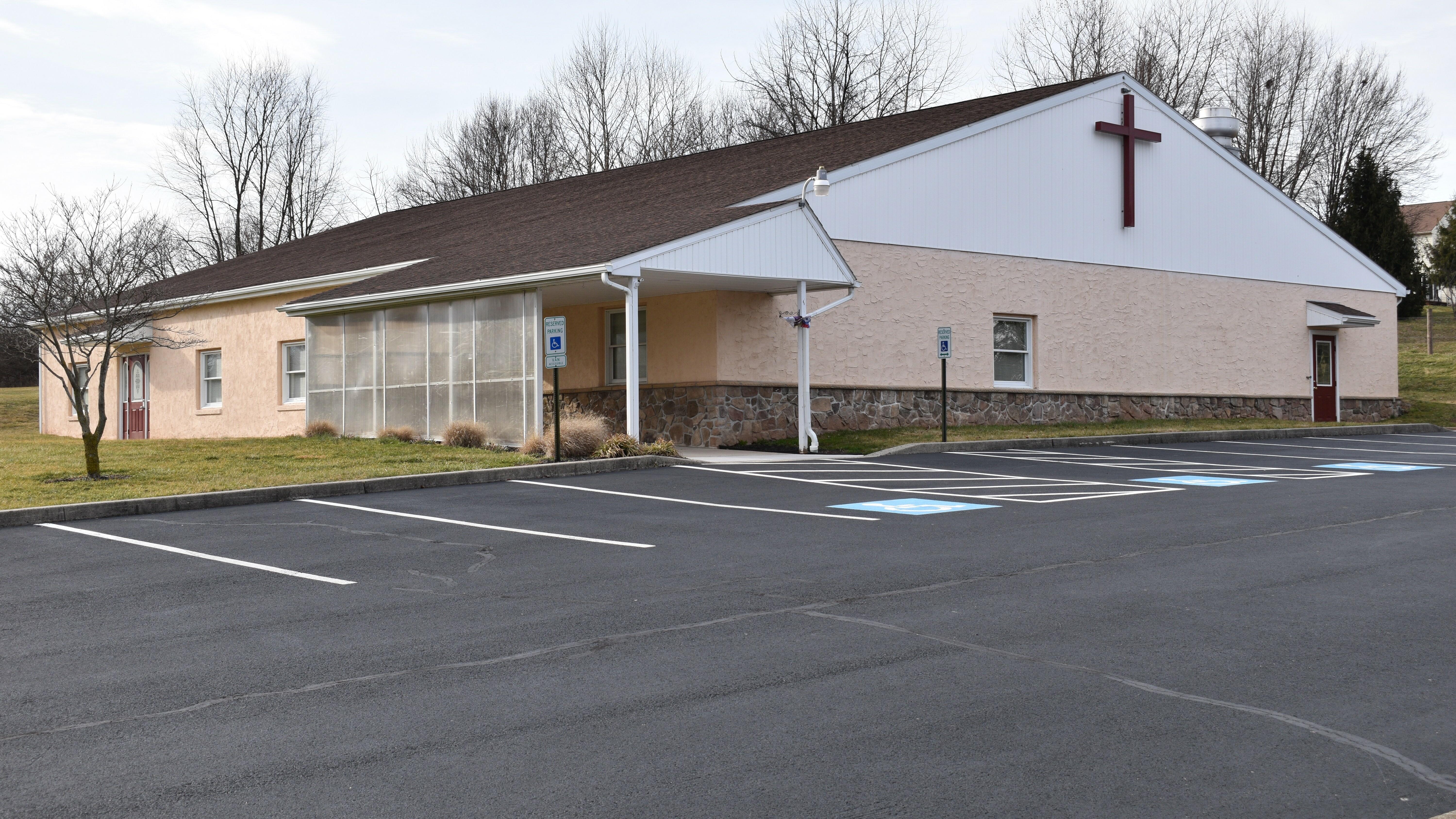
Spring City Fellowship
260927Sunday
Sunday September 27, 2026 10:15AM Service
Psalm 150:3NIV2011
- How Great Is Our God
- Baruch Haba
- David Danced
- Baruch Haba (Chorus)
- There Is A King
- Here In Your Presence
- Mt. Zion
Isaiah 41:10NIV2011
- Our Theme for 2026 is Embrace Transformation.We are taking a break from our series in the book of James to celebrate three Jewish holidays.Rosh Hashanah - The Feast of TrumpetsYom Kippur - The Day of AtonementSukkot - The Feast of TabernaclesThe Fall Feasts of Israel were not just prescribed for Israel but they are called “The Lord’s Feasts”
Leviticus 23:1–2 ESV 1 The Lord spoke to Moses, saying, 2 “Speak to the people of Israel and say to them, These are the appointed feasts of the Lord that you shall proclaim as holy convocations; they are my appointed feasts.I don’t preach sermons on the fall feasts every year.Some of today’s sermon comes from a sermon I preached in 2020.I thought it was good to include the Fall Feasts in our preaching calendar this year.Our theme is embrace transformation, so if celebrating biblical feasts from the Old Testament is a new thing for you, I hope you will embrace it and the transformation it can bring as from the Lord.It is good to celebrate the Lord’s Feasts - because we will all be celebrating them in heaven!The Feast of Tabernacles (Sukkoth) began last evening at sundown and continues through Friday evening.The Jews celebrate by building temporary shelters (called a Sukkah) on their patio, or perhaps on their roof or balcony.They will spend as much of the week as possible outdoors - eating, drinking and visiting with friends in their makeshift shelter.In the church our family attended when I was growing up, we would often have an outdoor church service in the fall. In fact, some would camp out the whole weekend. We would sometimes call it “church in the big sanctuary.” It was a reminder that God is bigger than our little church building. The whole earth is His!Deuteronomy 16:13–15 ESV 13 “You shall keep the Feast of Booths seven days, when you have gathered in the produce from your threshing floor and your winepress. 14 You shall rejoice in your feast, you and your son and your daughter, your male servant and your female servant, the Levite, the sojourner, the fatherless, and the widow who are within your towns. 15 For seven days you shall keep the feast to the Lord your God at the place that the Lord will choose, because the Lord your God will bless you in all your produce and in all the work of your hands, so that you will be altogether joyful.At my last church, there was a time that three families decided to go camping together. The next year a few mor joined in and then a few more after that. Three or four years into the experience we had half the church all camping together for the weekend. We would sit out under the stars and tell stories by the fire. Yes, those were great times!The Feast of Tabernacles is that kind of atmosphere.These are days of joy!They are days when we not only celebrate the harvest, but we take time to enjoy the fruit of our labor.We opened the feasts by talking about the sacredness of rest - this is also a kind of sacred rest.It is a time when you reflect back on and tell stories about the past.It is a time to be present in relationships - be in the moment - an really enjoy one another’s company.And it also a time to look toward the future with expectation, knowing that God’s faithful presence goes with us and will lead the way.So imagine with me that we are all outdoors in little booth-like shelters; providing ample shade, but also letting the wind blow through and loose branches over us let us peek through and see the sky.We are somewhat protected and cozy; but also part of a much more wide-open space.It is a picture of what it means to be God’s people, with the imminence and transcendence of His Spirit as our guide.If you are following along on your insert, you will se that I just gave you the outline.If you are watching online, there is a link to our e-bulletin which allows you to follow along with my slides.Reflect on the pastRemember that this life is temporary.The Feast of tabernacles is called Sukkoth in Hebrew or literally - booths.A Sukkah is the kind of structure it is describing.We loosely translate tabernacle as tent, but that’s not a Sukkah.Sukkah in Hebrew means woven together.It is a temporary structure with a light framework and a semi-open roof.It was like the booths used by vendors in the marketplace.It’s purpose is for shade or temporary shelter. - It’s not permanent.The first lesson of Sukkoth is to remember that we are just passing through this life.2 Corinthians 5:1–5 ESV 1 For we know that if the tent that is our earthly home is destroyed, we have a building from God, a house not made with hands, eternal in the heavens. 2 For in this tent we groan, longing to put on our heavenly dwelling, 3 if indeed by putting it on we may not be found naked. 4 For while we are still in this tent, we groan, being burdened—not that we would be unclothed, but that we would be further clothed, so that what is mortal may be swallowed up by life. 5 He who has prepared us for this very thing is God, who has given us the Spirit as a guarantee.We get so attached to our bodies and material things, but when you look at your life in the light of eternity what does all this really mean:Life on earth is meant to prepare us for eternity.Your life is a “dress rehearsal” to prepare you for life with God.It’s not that your life now is not important - it is!But it is just the warm-up for eternity.You are not yet clothed with your supernatural body. You’re in your “earth suit.”Having the Holy Spirit is a foretaste of what is to come.The purpose of dwelling in temporary structures is to remember what it was like in the wilderness.God led Israel through the wilderness for forty years until they would enter the promised land.Future generations would celebrate the feast of tabernacles just after taking in the year’s harvest.Part of the celebration would be the telling of stories, “Remember when we didn’t have a harvest?” “Remember when we had to gather manna and depend on God for each day’s food?”God provides for us in the wilderness, but don’t ever forget that when times are good and you are living in your promised land.The wilderness is a place of testing and learning to humbly trust God.Does everyone have to go through their own wilderness?To some extent that is true, but future generation can also learn the lessons that we have learned when we tell the story.We don’t have to relive the lessons of the past if we are willing to remember.It is also a time to celebrate the goodness of God!Manna was a miracle from heaven! At the time it probably just felt like survival.Their clothes did not wear out either. That’s a fact that can only be recognized and celebrated when looking back.My friend Pastor Mark Jayakumar likes to say, “If you pass the test you can enter His rest.”Remember how God has been with you.The Sukkah is also a reminder of the presence of God.During the wilderness journey there was a cloud that covered the tabernacle.Exodus 40:34–38 ESV 34 Then the cloud covered the tent of meeting, and the glory of the Lord filled the tabernacle. 35 And Moses was not able to enter the tent of meeting because the cloud settled on it, and the glory of the Lord filled the tabernacle. 36 Throughout all their journeys, whenever the cloud was taken up from over the tabernacle, the people of Israel would set out. 37 But if the cloud was not taken up, then they did not set out till the day that it was taken up. 38 For the cloud of the Lord was on the tabernacle by day, and fire was in it by night, in the sight of all the house of Israel throughout all their journeys.The tabernacle itself was not so much a sukkah, but a tent.The cloud covering over the tabernacle was what the sukkah represents.God gave them shade, protection from the heat, by His presence.That cloud also filled the tabernacle with the glory of God.They followed the cloud wherever they went. It was the very presence of God that led them through the wilderness.Jesus is the embodiment of the presence of God that the sukkah represents.John 1:14 AMP 14 And the Word (Christ) became flesh (human, incarnate) and tabernacled (fixed His tent of flesh, lived awhile) among us; and we [actually] saw His glory (His honor, His majesty), such glory as an only begotten son receives from his father, full of grace (favor, loving-kindness) and truth.He came and He lived among us.As you are around the table with your family, Jesus is there with you.As you are visiting and sharing stories with friends, Jesus is there with you.As you are praying and thanking God for His goodness and the abundance that we all enjoy, Jesus is there with you.He lived for a time in the same tents of flesh that we do, that was His wilderness experience.But now He is preparing eternal dwellings for us.And not only that, but He has given us all that we need for life in the here and now.Be in the moment.Recognize the source of life.John 7:37–39 ESV 37 On the last day of the feast, the great day, Jesus stood up and cried out, “If anyone thirsts, let him come to me and drink. 38 Whoever believes in me, as the Scripture has said, ‘Out of his heart will flow rivers of living water.’ ” 39 Now this he said about the Spirit, whom those who believed in him were to receive, for as yet the Spirit had not been given, because Jesus was not yet glorified.The Feast of Tabernacles at the time of Jesus involved a water drawing ceremony.The priest would retrieve a pitcher of water from the pool of Siloam and pour it out in a basin on the altar.It was not just an appeal to heaven for rain, but for spiritual refreshing and blessing.They would quote this scripture:Isaiah 12:3 ESV 3 With joy you will draw water from the wells of salvation.Jesus claimed to be the fulfillment of that ceremony.Except instead of water falling out of the sky, it would come from the depths, just as they drew the water out of the depths of the earth in the ceremony.Refreshing, spiritual life and vitality would come from within, for our innermost being.Jesus used the phrase, “as the scriptures say,” but He was paraphrasing. Where do the scriptures say that rivers of living water come from within?Ezekiel 36:24–27 ESV 24 I will take you from the nations and gather you from all the countries and bring you into your own land. 25 I will sprinkle clean water on you, and you shall be clean from all your uncleannesses, and from all your idols I will cleanse you. 26 And I will give you a new heart, and a new spirit I will put within you. And I will remove the heart of stone from your flesh and give you a heart of flesh. 27 And I will put my Spirit within you, and cause you to walk in my statutes and be careful to obey my rules.The imagery is all there.they will come into their promised inheritance as is celebrated at Sukkoth.The water of life, cleansing and refreshing will pour over them.Except it will come from within, because they will have a new heart and a new spirit.And the Holy Spirit will be poured out upon them.The water drawing ceremony ultimately foreshadowed the pouring out of the Holy Spirit.Jesus, the presence of God, is what we are really thirsting for.The Holy Spirit is all of that welling up inside of us.The cloud that was over the tabernacle is now a stream of water coming from a renewed heart and a revitalized spirit.Let God illuminate your life.Another ceremony during the Feast of Tabernacles in Jesus’ day was the illumination of the temple.This amazing light show was the most incredible thing in its day.It consisted of lighting four large menorahs at the four corners of the temple complex.They were said to be some seventy feet high. The laps were golden bowls each holding about ten gallons of oil.It would be like lighting the Olympic torch times four.It would light up the temple grounds like daylight and the spectacle could be seen for miles around in all the surrounding villages.Imagine how it would be for people who had made the pilgrimage to the Feast. The city would triple or quadruple in population. I’m sure that the Sukkah made it possible for people to stay with relatives on the rooftop or in a courtyard. But many people would be forced to find shelter in the surrounding villages. Around the beginning of the feast would be a full moon, but as the feast continued this giant light display would continue to light up the surrounding hillsides, providing light for people traveling to and from the temple.It was in this context that Jesus said these words:John 8:12 ESV 12 Again Jesus spoke to them, saying, “I am the light of the world. Whoever follows me will not walk in darkness, but will have the light of life.”Do you need light?Do you want to understand what life is all about? Why you are here? and what God wants you to do?Jesus not only has the answer, He is the answer.Jesus made a way for you to come back to God, to know God and to know God’s love for you.When you give your life to Jesus it’s like turning on the light.Life will seem much different and a lot of things will begin to make sense.Celebrate the fruit of God’s promises.There’s another tradition of the Feast of Tabernacles that continues to the present day.Celebrants will carry the lulav and the etrog which represent the fruits of the landLeviticus 23:40 ESV 40 And you shall take on the first day the fruit of splendid trees, branches of palm trees and boughs of leafy trees and willows of the brook, and you shall rejoice before the Lord your God seven days.They are four representative species of the fruit of the land of IsraelThe etrog or citron is a citrus fruit (like a lemon)The lulav is a palm branch.There is also the myrtle and the willow, shown here bound together with the lulav.But the four species are also also said to represent our bodies.The etrog is the heart.The lulav is the spine.The myrtle is the eyes.The willow is the lips.So in waving them before the Lord, we are not only thanking God for the fruit of the harvest, but we are presenting ourselves to God as His fruit and His harvest!While we the fruit of His redemption - we are the harvest that God is gathering to Himself!Look forward to the future.On the calendar of the Lord’s Feast, the feast of Tabernacles is the culmination.It is to be a season of joy, not only that the harvest is in, but that we can finally rest and enjoy what we have worked so hard for.It is a small foretaste of heavenIn eschatological terms it is the marriage supper of the lamb.Revelation 19:9 ESV 9 And the angel said to me, “Write this: Blessed are those who are invited to the marriage supper of the Lamb.” And he said to me, “These are the true words of God.”While we look back and remember the time spent in the wilderness and the lessons that we learned about trusting God, we also look ahead to the culmination of our life with God.Just as the wilderness is to the promised land, so is our earthly existence to our heavenly one.Remember the Sukkah is temporary, and so it points to a permanent dwelling.We will eventually celebrate the Feast of Tabernacles, the real feast, in heaven with Jesus.All the nations will celebrate the feast in the Kingdom of God.Zechariah 14:16 ESV 16 Then everyone who survives of all the nations that have come against Jerusalem shall go up year after year to worship the King, the Lord of hosts, and to keep the Feast of Booths.Zechariah is describing the literal and physical reign of Christ on the earth.Th final battle has ended and Jesus has established the Kingdom of God on this earth.Some call this the millennial reign of Christ.It is interesting to note that Zechariah says we will still be celebrating the Feast of Tabernacles when Christ returns.Only, it will not just be the Jews celebrating, but all the nations will go up to Jerusalem to celebrate the feast.In fact it goes so far as to say that the nations which are not represented will not have rain the following year.This is the allegiance that God asks for, that we spend time in His presence.His presence is the source of life, just as rain is to the earth.If you want to begin preparing for heaven, start looking for and drawing strength from the presence of God.The presence of God is with us forever.I started out by saying that the Sukkah is a reminder of the temporary nature of this life.And that it is also a symbol or a reminder of the presence of God.One more thing needs to be said, the presence of the Lord is not temporary, it is permanent.Hebrews 8:1–2 ESV 1 Now the point in what we are saying is this: we have such a high priest, one who is seated at the right hand of the throne of the Majesty in heaven, 2 a minister in the holy places, in the true tent that the Lord set up, not man.When God gave Moses the instructions for the tabernacle on the mountain, it was patterned after a heavenly tabernacle.Everything about the tabernacle reflected something of heavenly reality.The Sukkah also reflects a heavenly reality, the presence of God.The symbol may be temporary, but the reality is permanent.After eight days the Sukkah will come down.The decorations will be put away.The branches will be thrown out.The poles will be stored for another year.But the presence of God is renewed such that we will go in that strength for another year, continuing to abide in His presence.The fall feasts end with days of joy - the joy is meant to linger beyond the feasts.Seasons will come and go, but the joy of the Lord remains.Psalm 16:11 ESV 11 You make known to me the path of life; in your presence there is fullness of joy; at your right hand are pleasures forevermore.Questions for reflection:What is a wilderness that God has brought you through? How did God sustain you and provide for you? What are some miracles that you experienced along the way?Is there a place that you can go to get alone with God? What can you use as your Sukkah for this season? How will you decorate it? What reminders of God’s faithfulness would you have in your Sukkah?How are you refreshed in the presence of God? Is there living water coming from inside you? How has Jesus brought light to your life? How will you give expression to your joy? - Surely The Presence Of The Lord
- Surely The Presence Of The Lord
Leviticus 23:1–2ESV
Deuteronomy 16:13–15ESV
2 Corinthians 5:1–5ESV
Exodus 40:34–38ESV
John 1:14ESV
John 7:37–39ESV
Isaiah 12:3ESV
Ezekiel 36:24–27ESV
John 8:12ESV
Leviticus 23:40ESV
Revelation 19:9ESV
Zechariah 14:16ESV
Hebrews 8:1–2ESV
Psalm 16:11ESV
- God Really Loves Us

Spring City Fellowship
(610) 948-5250
31 members • 6 followers