• Can't seem to find a notebook that is supposed to be in this group. Does anyone have it or know where it might be found. Thanks Kent
    1. Hey Kent, I assume you have in your library "LA171 Learn to Use Biblical Hebrew". Open this book, Look in the table of contents for the "Course Outline". Just above the course outline is this link https://faithlife.com/la171. Michael S. Heiser, LA171 Learn to Use Biblical Hebrew, Logos Mobile Education (Bellingham, WA: Lexham Press, 2020). You'll need to join this "Faithlife Group". Once in this Faithlife Group, make sure you navigate into this group (selecting this group from the left column of "Groups". Once inside the actual group, look to the left column under "Community" for "Bible Study" and expand this by clicking on "Bible Study". When this expands you'll see "Logos Documents". In the center area of the Group will be a list of documents you can download. Resources, Readings & Prayer List Good Luck!
  • I take it this course uses the traditional Hebrew (Masoretic) text.
    1. Where do I find the document for this course?
      1. The Notes file is available under Bible Study > Logos Documents. Click "Actions" then "Connect" to it, and it will appear in your Logos documents.
    2. Hi to all, Is it possible to get access to the Document for Readings (and Notgebook) of this course?
      1. , I am doing something that is not correct. Still, I don't see document. I downloaded the excel file but that's it. The second document has no data.
      2. are you looking for the document within Logos Bible Software (not this group)? Ultimately, the notes document isn't a necessary part of the class. It merely highlights sections in books that are used as readings in the Explore section of the class. You can still access those sections directly from the links and even create your own notes file.
      3. Actually, I was looking online but not in my Logos software. Later, I found it. Todah!
    3. Hi Logos folks, may I know how to list out all verses that contain "אדם" but without the definite article "ה"? Thanks I am studying Hosea 6:7 to see which translation is more suitable, 'like men' or 'like Adam'. Brakel claimed that: 'The original text also does not present any reason to prevent us from using the proper name. No ה (emphaticum, a symbol for emphasis) may be placed next to a proper name. If, however, this word means “man” it is frequently accompanied by an ה.' Hence I would like to list out (1) all verses that contains "אדם" but without the definite article "ה" (2) all verses that contains "אדם" and with the definite article "ה" to examine the context of each verse Wilhelmus à Brakel, The-Christian’s Reasonable Service Vol.1 chapter 12
      1. Hello Faithlife staff, on the LA171 course intro it says to come here and get a document for the "list of readings" but it seems there is not a document actually uploaded for that. I got the excel file of linked resources but the 2nd file for "listed readings" is not able to be downloaded, the page is blank. Is there a mistake on my end and I only need the linked resources spreadsheet, or does Logos need to upload the "reading list" again?
        1. The excel file of linked resources will show you which resources are linked to in the courses. There is also a Logos notes file that highlights the readings in resources you own. You have to "Connect" to this document then view it inside Logos.
        2. Thanks , I think I successfully "connected" -- now how do I connect from within Logos desktop? Is it through the LA171 course or a different menu within the app?
        3. Nevermind, I tinkered around in the "notes" tool and found the listing. Thanks for the help!
      2. I'm looking forward to learning Hebrew. I was curious if I take this course will I be able to read and translate a large or at least a small portion of some of the Hebrew text without constantly looking it up in lexicons and grammars? If not, which Logos courses or text books, etc. should I purchase? Thanks, Billy
        1. Thank you very much for getting back to me so fast. I'm thinking that maybe I should use a mixture of both methods since I'm attempting to learn Hebrew on my own. I have taken the Greek Language in the past so I know it's going to take some dedication on my part. Do you think that may be a better approach? Thanks, Billy
        2. I definitely think that taking both would help you best learn and retain the language as long as you are a regular Logos user.
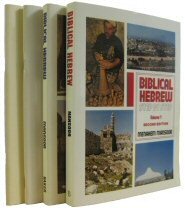
        3. Hi Billy, I haven't started this course yet or the language course, but went over all the readings referenced in the course tool. The first book of this was included in this course and based on looking at it, I went ahead and got the package with the keys and other book on sale this past weekend. Maybe? I am starting from scratch and desire to become proficient as well.... https://www.logos.com/product/4333/biblical-hebrew-step-by-step
      3. This comes right out of the Syllabus the very first paragraph. Learn to Use Biblical Hebrew (LA171) is a Logos tools—based approach to using biblical Hebrew for more confident exegesis in the Old Testament. Rather than focusing on memorization and preparing you to translate, this course provides immediate payoff in increased exegetical awareness of how the Greek vocabulary, grammar, and syntax determines the meaning of the Old Testament. Michael S. Heiser, LA171 Learn to Use Biblical Hebrew, Logos Mobile Education (Bellingham, WA: Lexham Press, 2020). Shouldn't the last sentence say, " . . . awareness of how the Hebrew vocabulary, grammar, and syntax . . ."
        1. Oops. Good catch. I'll get that updated.
      4. Just purchased LA171 and am looking forward to the study.
        1. Same here...